What Happens During a Solar Installation? A Step-by-Step Guide

For many homeowners considering solar panels, the installation process can feel unfamiliar. Questions around timescales, disruption, equipment, and what actually happens on installation day are common.
Understanding the process helps make the move to solar feel much more straightforward.
Here’s a step-by-step overview of what typically happens during a solar installation.
Step 1: Initial Assessment and Survey
Every solar installation begins with a property assessment.
This helps determine:
- Roof orientation and pitch
- Available roof space
- Shading from trees or nearby buildings
- Current electricity usage
- Suitability for battery storage
The goal is to design a system tailored to the property rather than applying a one-size-fits-all approach.
Step 2: System Design
Once the survey is complete, the solar system is designed around the home’s energy needs.
This includes:
- Number of panels
- Panel positioning
- Inverter selection
- Battery storage options
- Expected energy generation
Careful system design plays a major role in long-term efficiency and performance.
Step 3: Installation Day
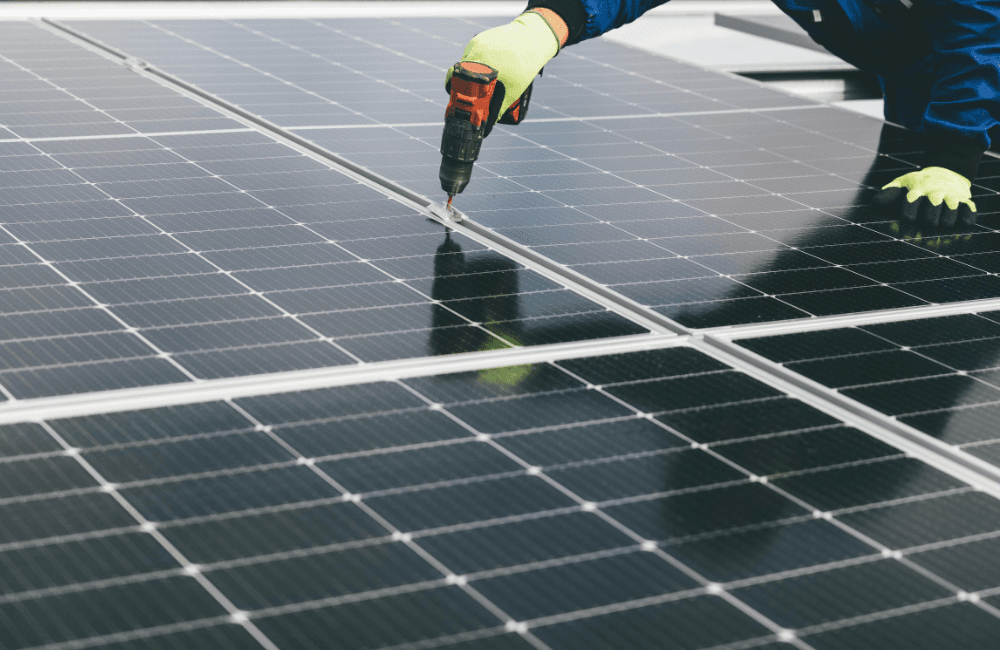
On installation day, the first stage is usually setting up scaffolding and preparing the roof.
Mounting rails are then secured to the roof structure before the solar panels are installed safely into position.
At the same time, electrical components such as the inverter and battery system (if included) are installed internally.
Most residential installations are completed within one to two days depending on system size.
Step 4: Electrical Connection and Testing
Once fitted, the system is connected and thoroughly tested.
This includes checking:
- Panel performance
- Electrical safety
- Monitoring systems
- Battery operation
- Grid connection
The system is then commissioned and made ready for use.
Step 5: Monitoring Your Energy
Modern solar systems include monitoring software that allows homeowners to track:
- Energy generation
- Energy usage
- Battery charging
- Electricity exported to the grid
This gives clear visibility into how the system performs throughout the year.
Is Solar Installation Disruptive?
For most homes, disruption is relatively minimal.
Installers work mainly externally, and internal work is usually limited to inverter and electrical connections.
A professionally planned installation ensures the process remains efficient, safe, and straightforward from start to finish.
Conclusion
Solar installation is often much simpler than homeowners expect. With the right planning and system design, the process can usually be completed quickly while delivering long-term energy savings and improved sustainability.