
Shift energy in time
Use more stored energy during the evening or another chosen period.
Keep more energy for when life happens · Define the job first
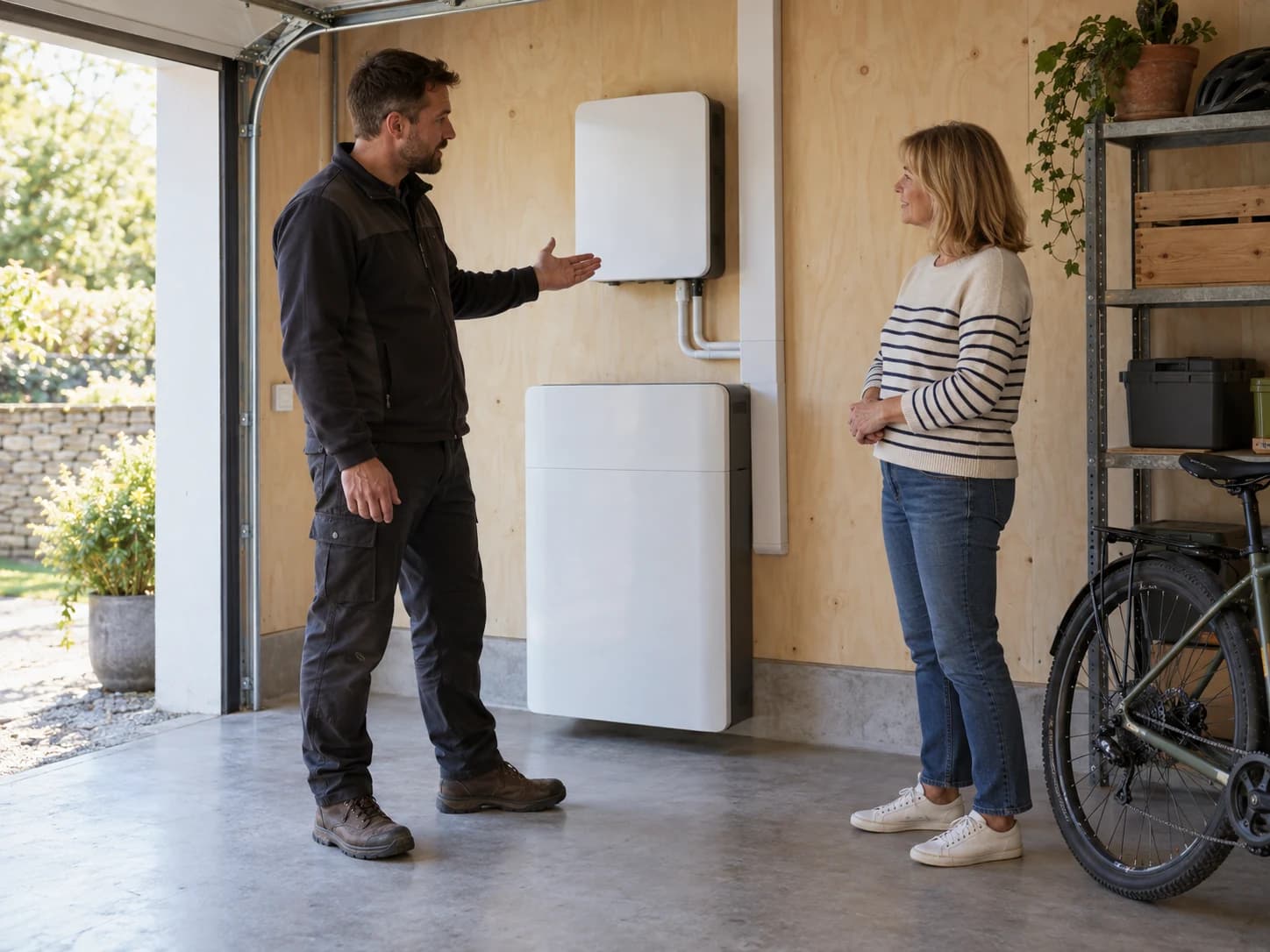
A battery stores solar or lower-cost grid energy for later. The right size depends on how and when your home uses electricity.
Use more stored energy during the evening or another chosen period.
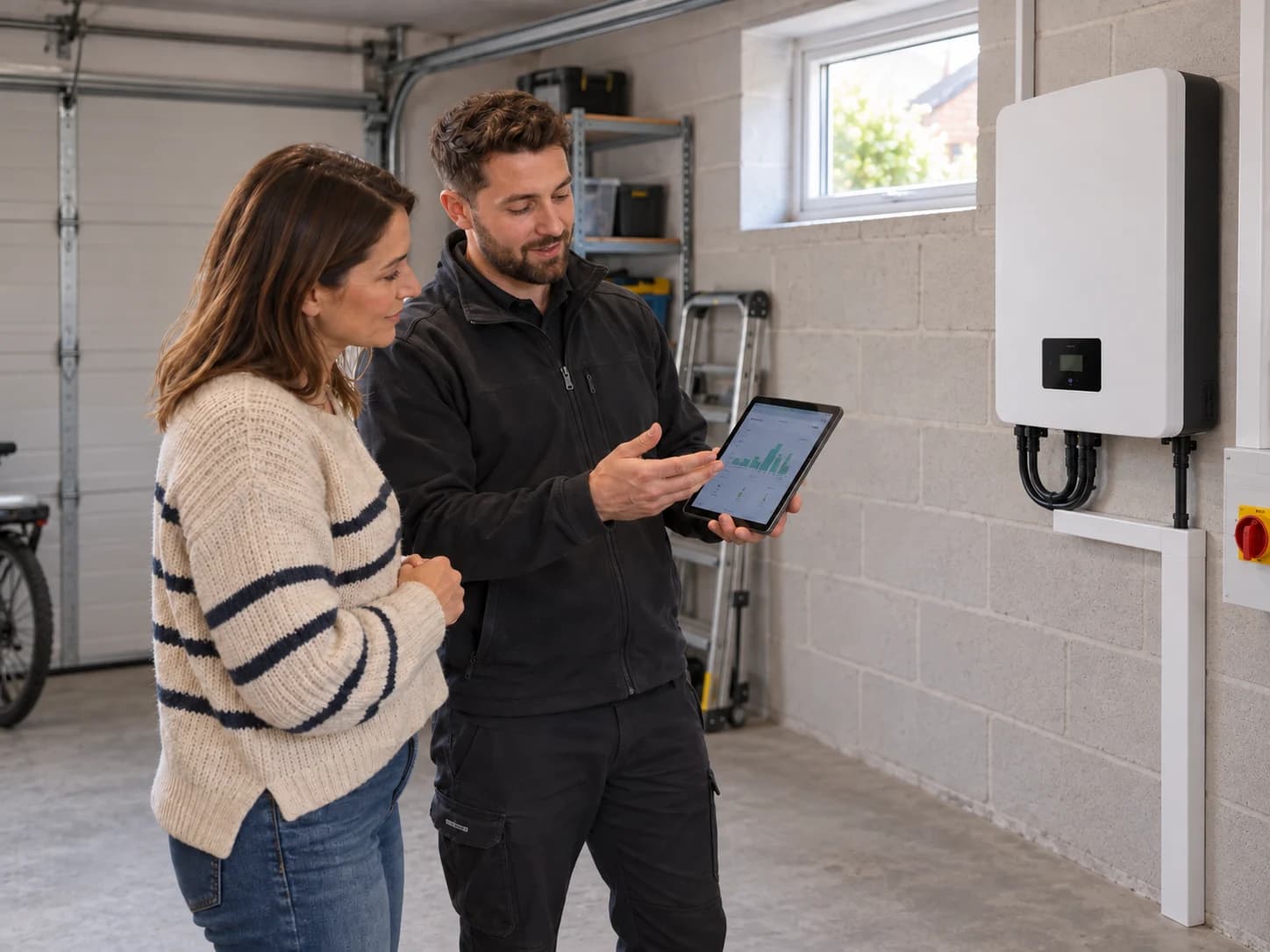
Monitoring helps the household understand charging, discharge and grid use.
Plan around future solar, an EV or a heat pump before electricity demand grows.
Design generation, inverter and storage together from the outset. The cleanest route when both technologies are part of one project.
Add storage after checking the inverter, monitoring and electrical arrangement. Often possible, but compatibility shapes the right approach.
Charge from the grid during selected tariff periods and use energy later. Value depends heavily on tariff rules and household consumption.
Give the battery a clear job
Warmaway starts by agreeing the objective. Solar self-use, tariff shifting and backup resilience require different assumptions and sometimes different equipment.

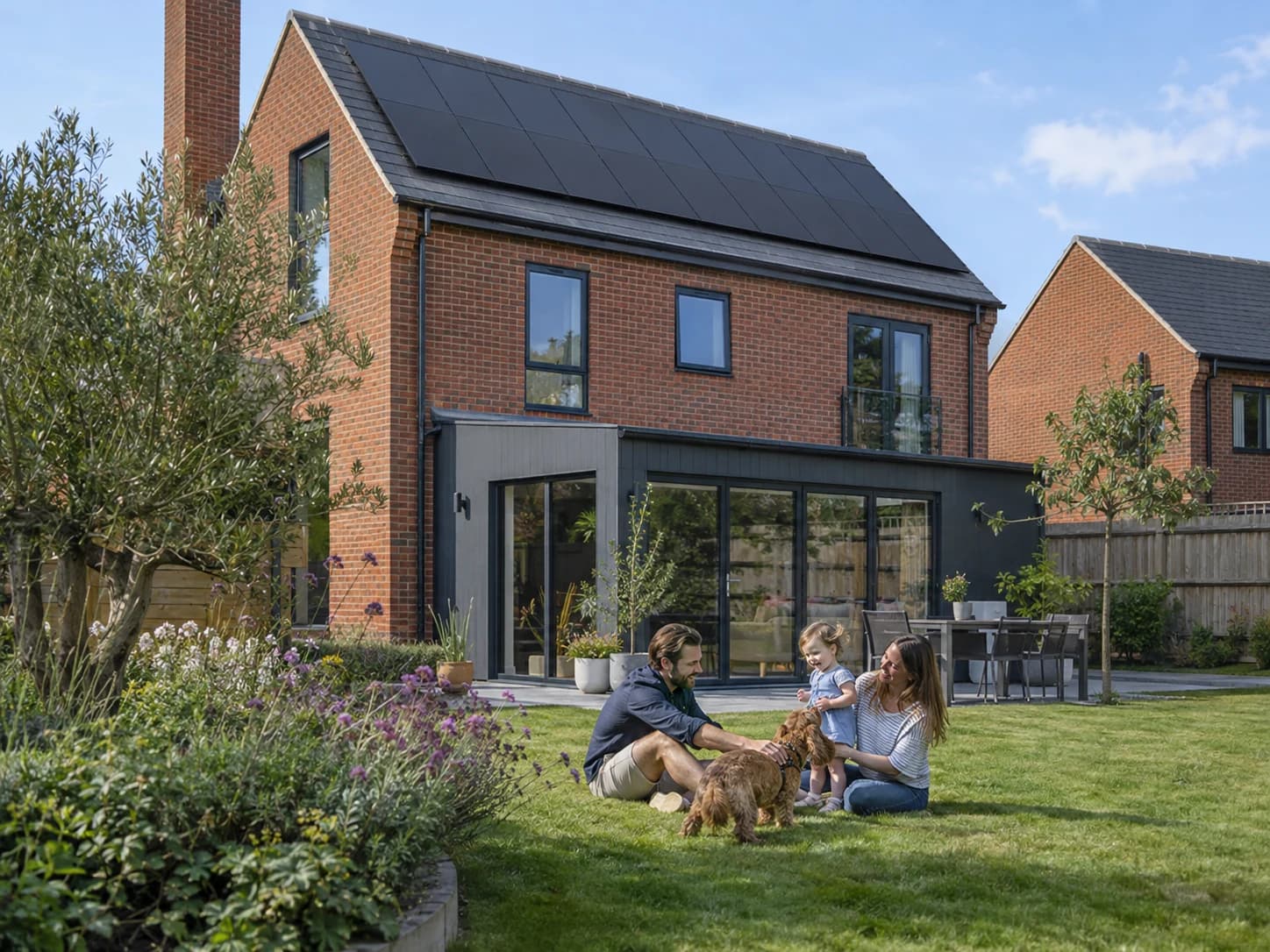
A battery can hold some daytime solar generation for use later, increasing the proportion of self-generated electricity used in the home.

Some households may use a battery without solar to shift grid electricity from lower-cost tariff periods. Suitability depends on consumption, tariff structure and the battery objective.
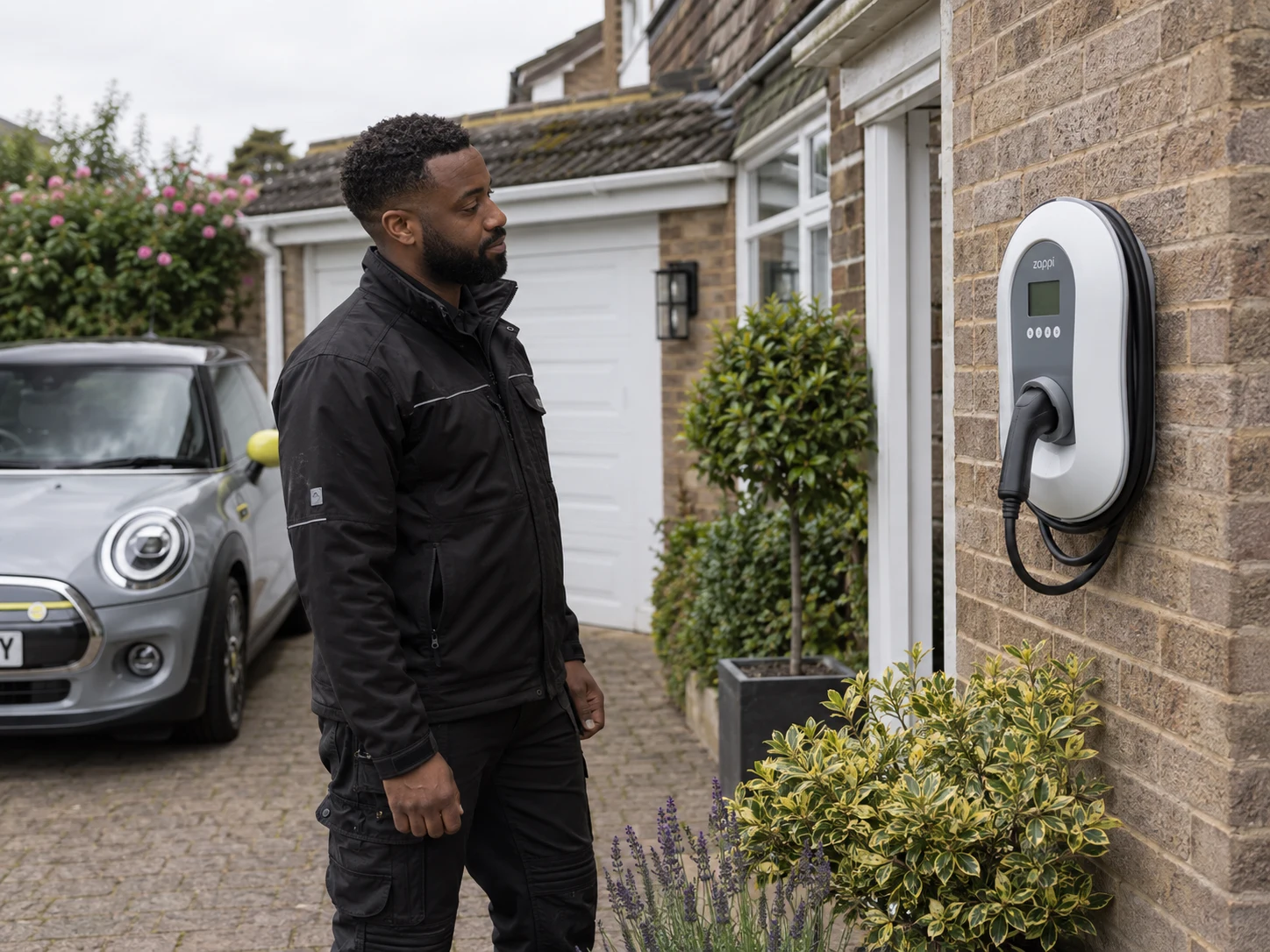
An EV or heat pump can significantly change electricity use. Warmaway looks at the wider system so the battery is not chosen in isolation.
Solar & battery
Support is not limited to one grant. VAT relief, export payments and local funding can all influence the cost and choice.
Applies to qualifying residential solar-panel and electrical battery-storage installations until 31 March 2027.
Eligible systems can receive payments for surplus electricity exported to the grid. Tariffs and eligibility vary by supplier.
May include solar panels for eligible lower-income households in England, subject to the property and available local funding.
A property-led answer
A larger battery is not automatically a better one. It should be capable of meeting useful household loads without routinely sitting empty or unused.

From usage data to handover
A battery can do several things, but not every system does all of them.
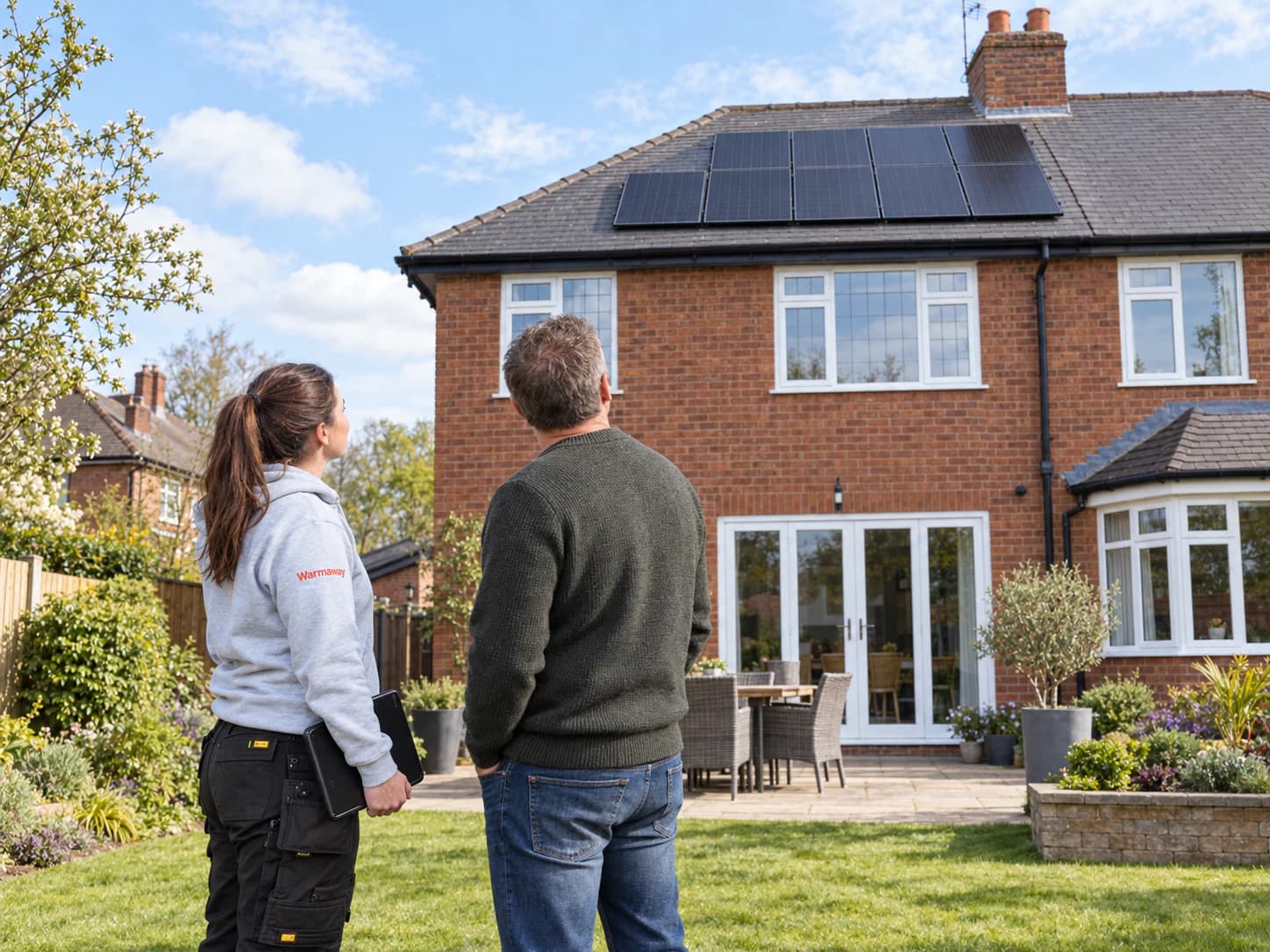
We review consumption, tariffs, solar and future plans.
Battery capacity and inverter approach are matched to the goal.
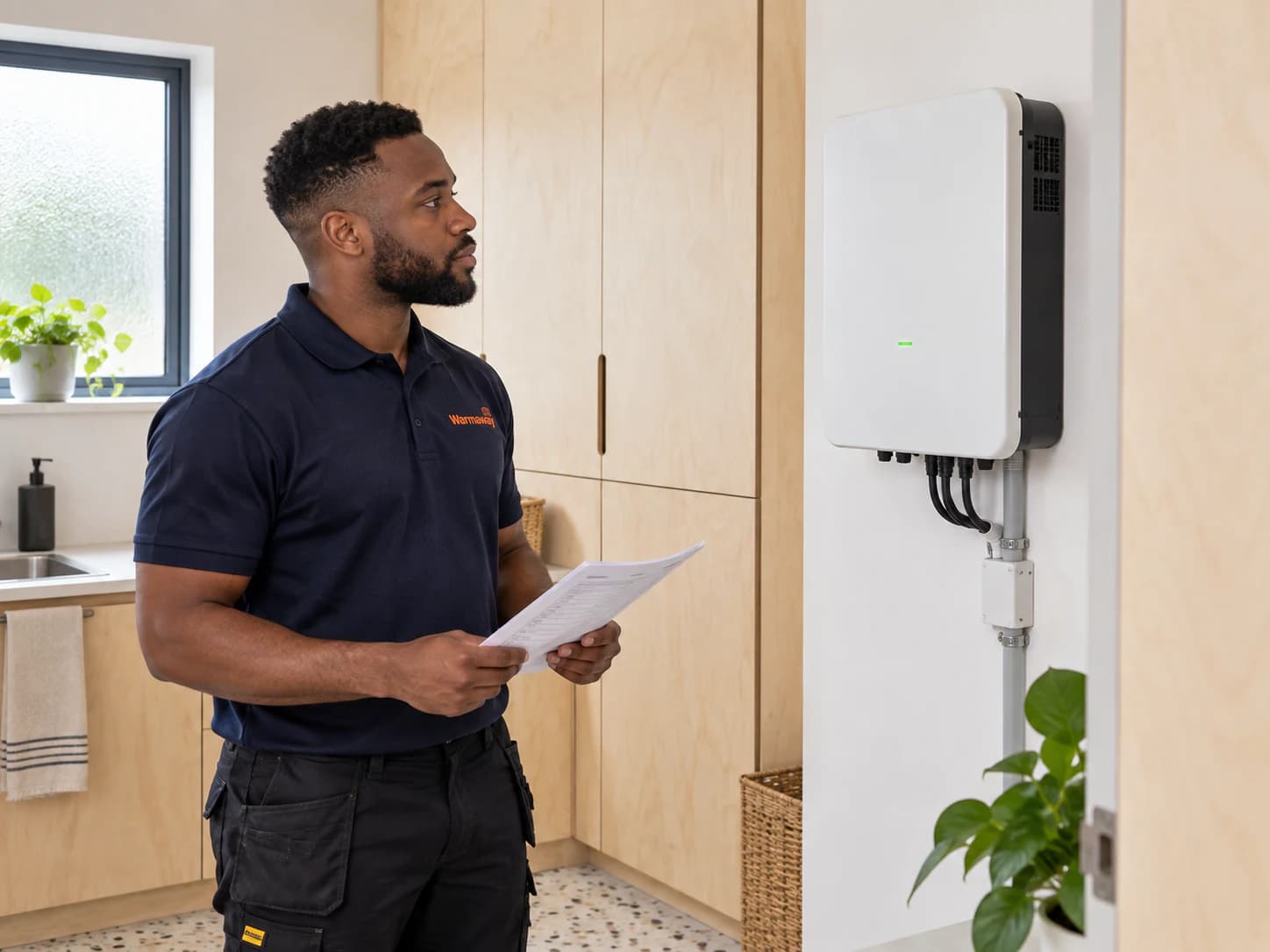
Electrical capacity, location and safe access are checked.
The system is tested and monitoring is explained.
Designed before it is sold
Capacity is only one figure. Power output, inverter limits, usable storage, location and the loads you expect it to serve are equally important.
A complete project
Questions, answered simply
Potentially, yes. The value depends on your tariff, load profile and what you want the battery to do.
Often, yes. The existing inverter, electrical arrangement and system age need to be checked before the best approach is confirmed.
Not automatically. Backup needs compatible equipment and a defined set of supported loads. Standard grid-connected systems may shut down during an outage for safety, so resilience must be designed explicitly.
Sizing should consider solar surplus, evening use, peak demand, tariff strategy and future loads. A usage-led recommendation is more reliable than choosing by property size alone.
Can’t find what you’re looking for? View our FAQ support page.